Canva Template Daily Journal
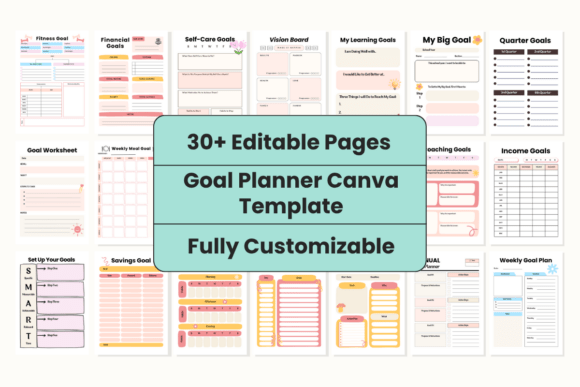
The Canva Template Daily Journal is a downloadable digital journal designed for use in Canva’s free and paid editing platforms. It consists of pre-designed, customizable pages—such as daily reflection prompts, gratitude logs, habit trackers, and mood check-ins—that users can open, personalize, and either print or use digitally. It is not software, an app, or a subscription service; it is a static design file (typically in PDF or Canva-compatible format) intended for individual or small-business use.
People often explore tools like the Canva Template Daily Journal when seeking structure without rigidity—especially if they’ve tried traditional journaling methods and found them unsustainable. Unlike handwritten notebooks or generic note-taking apps, this template offers visual consistency, intentional spacing, and prompt-based guidance—all editable within Canva. That flexibility makes it relevant to several distinct user groups: individuals looking to build reflective habits, creative entrepreneurs building printable product lines, and print-on-demand (POD) sellers sourcing original, low-overhead designs.
One practical benefit is accessibility. Because Canva has a free tier with robust editing features, users don’t need design experience—or additional software—to adapt the journal to their preferences. Font choices, colors, layout order, and even prompt wording can be adjusted. For someone who values both aesthetics and function, that level of control matters. It also supports multiple output formats: users can export as PDF for printing, share as a view-only link for personal digital use, or generate high-resolution files for professional printing.
However, there are important limitations to consider. The Canva Template Daily Journal is strictly a digital download—no physical item ships. More critically, its license restricts redistribution. You may not resell the template file itself, offer it as a free download, or distribute it in editable or unedited digital form—including via email, social media, or membership sites. You *may*, however, print physical copies and sell those hard copies, provided you handle production, fulfillment, and branding yourself. This licensing model suits small-scale creators but rules out white-label digital offerings or SaaS-style integrations.
This leads to a key decision point: Is your goal personal reflection, commercial printing, or digital distribution? If you’re journaling for self-awareness or emotional regulation, the template provides a consistent framework—more guided than a blank page, less prescriptive than rigid habit apps. Its strength lies in reducing setup friction: instead of spending time designing layouts, you begin reflecting immediately. That’s especially helpful during transitional periods—starting a new routine, managing stress, or recovering from burnout—when cognitive load is high and motivation is low.
For small business owners, the template functions as a starting asset—not a finished product. It requires effort to differentiate: adding original illustrations, customizing prompts to match a niche (e.g., “teacher wellness” or “creative entrepreneur focus”), or bundling with complementary resources like printable goal worksheets. Success depends less on the template itself and more on how thoughtfully it’s adapted and positioned. Since Canva’s interface is widely used, competitors may offer similar designs; standing out requires clarity of audience and attention to detail in execution—not just aesthetics.
That said, alternatives may better suit certain needs. If you prioritize automation—like syncing entries with calendar events, tracking streaks over time, or generating monthly summaries—an app-based journal (e.g., Day One, Journey, or Reflectly) offers functionality this template cannot replicate. Similarly, if you prefer handwriting but want durability and tactile feedback, a well-bound physical journal with perforated pages or dot-grid layouts may provide a more satisfying long-term experience than printed PDFs.
Another consideration is scalability. While the Canva Template Daily Journal works well for one-off prints or small-batch POD orders, it lacks built-in version control or multi-user collaboration features. Teams or educators wanting shared templates across classrooms or coaching cohorts would need to manage updates manually—unlike cloud-native tools with centralized editing and permissions. Likewise, accessibility features (e.g., screen reader compatibility, adjustable text size beyond Canva’s editor limits, or language translation support) are limited by what Canva natively supports and how the template was originally constructed.
Practical evaluation starts with clarifying intent. Ask yourself:
- What’s my primary use case? Personal practice, client-facing printables, or resale via POD?
- Do I already use Canva regularly? Familiarity reduces learning curve; lack of experience may require time investment to master basic edits.
- How much customization do I realistically need—and have time for? Minor tweaks (color, font, prompt rewording) take minutes; full redesigns may approach the effort of building from scratch.
- What’s my distribution plan? If selling digitally is part of your strategy, this template’s license prohibits that path—making alternatives necessary.
It’s also worth noting that while the template is designed for ease of use, effectiveness still depends on consistent engagement. No tool guarantees habit formation. Research suggests that journaling yields measurable benefits—improved emotional regulation, enhanced self-awareness, reduced stress—only when practiced regularly and reflectively. The Canva Template Daily Journal supports that process logistically, but not motivationally. Users should pair it with realistic expectations: start with 3–5 minutes per day, focus on authenticity over completeness, and allow room for iteration.
Finally, consider longevity. Canva occasionally updates its editor interface, and file compatibility across devices isn’t always guaranteed—especially with older mobile versions or third-party PDF viewers. Keeping backups, testing exports across platforms, and documenting your customizations help mitigate risk. For commercial users, maintaining clear records of license terms also protects against unintentional policy violations, particularly as business models evolve.
In summary, the Canva Template Daily Journal is most aligned with readers who value visual cohesion, editable simplicity, and a balance between guidance and autonomy. It fits well for individuals building sustainable reflection practices and for small creators launching tangible, differentiated products—provided they understand and respect its usage boundaries. It is less suited for those needing dynamic digital functionality, team-wide deployment, or unrestricted digital resale rights. As with any tool, its utility emerges not from its features alone, but from how intentionally and consistently it’s applied to real-world goals.